If your teenager wants to lift weights, you may be wondering whether strength training is safe or whether it could damage growing bones, cause an injury or interfere with normal growth.
The direct answer is reassuring: properly designed and supervised strength training can be safe and beneficial for teens. It has not been shown to stunt growth when exercises, resistance and progression are appropriate for the young person.
The key words are properly designed and supervised. A thoughtful youth program is very different from a teenager copying an advanced workout online, competing with friends or attempting the heaviest weight possible without instruction.
Does lifting weights stunt a teenager’s growth?
This is one of the most common concerns I hear from parents, but the idea that appropriate strength training automatically stunts growth is not supported by current guidance.
Growth plates can be injured, just as other bones, muscles and joints can be injured during sports or physical activity. However, supervised resistance training using sound technique and appropriate loads has not been shown to harm normal growth. Many reported weight-training injuries among young people involve unsafe equipment use, a lack of supervision or attempts to lift too much.
The goal should never be to prove how much a teen can lift. It should be to teach the teen how to move well, control resistance and build strength gradually.
What age can a young person begin strength training?
There is no single birthday when strength training suddenly becomes safe.
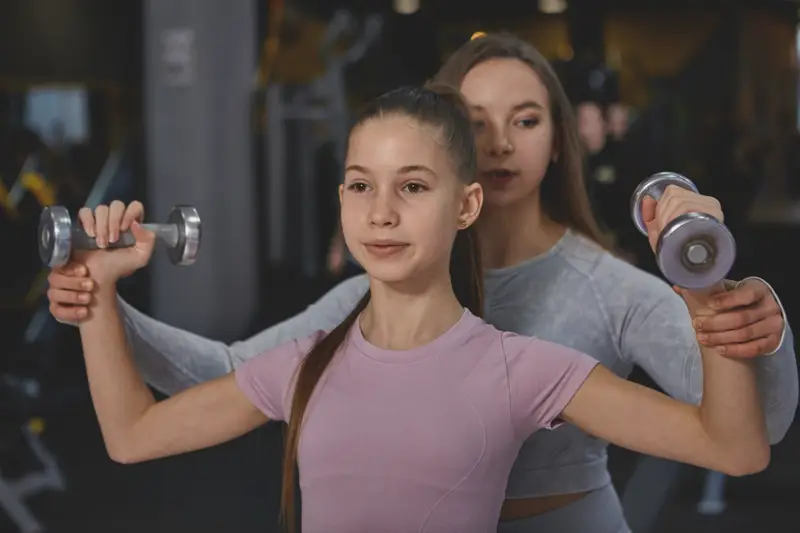
Readiness depends more on whether the child or teen can listen, follow directions, use equipment responsibly and maintain attention to technique. Resistance training also does not have to begin with a barbell. Body-weight exercises, resistance bands, medicine balls, cables, machines and light dumbbells can all be useful.
A younger or completely inexperienced teen may begin by learning fundamental movements such as:
- squatting to a bench with control;
- pushing and pulling with a band or cable;
- hinging safely at the hips;
- stepping, balancing, carrying and landing;
- bracing the trunk while moving the arms or legs.
Once those movements are consistent, resistance can increase gradually. The progression should be earned through control, not rushed because a friend is lifting more.
What are the benefits of strength training for teens?
The benefits can extend well beyond making muscles bigger. Depending on the teen and the program, resistance training can help develop:
- muscular strength and endurance;
- movement skills and body awareness;
- confidence using gym equipment;
- balance, coordination and physical control;
- support for sports performance;
- stronger bones and long-term exercise habits.
Strength training can also give non-athletes a way to feel capable and successful with exercise. A teen does not have to play varsity sports to benefit from becoming stronger.
For athletes, the program should support the demands of their sport rather than simply add more fatigue. A hockey player, golfer, runner or lacrosse player may need different emphases, but all still benefit from learning foundational movement patterns and developing balanced strength.
What should a safe teen strength program look like?
A safe program should be individualized, progressive and technique-focused. It should also feel like training, not punishment.
1. Begin with an assessment and conversation
Before training begins, the trainer should ask about the teen’s goals, sports schedule, previous exercise experience, injuries, pain, medical conditions and any guidance from a physician or physical therapist.
The trainer should also learn what the teen actually wants from the experience. A program works better when the young person has some ownership rather than feeling forced to participate.
2. Teach technique before adding substantial resistance
The teen should first demonstrate control through an appropriate range of motion. Adding weight should not make the movement unrecognizable.
Good coaching includes clear instructions, demonstrations and feedback. It also teaches the teen how to set up equipment, breathe, stop a set safely and recognize the difference between normal muscular effort and pain.
3. Use age- and ability-appropriate exercises
There is no required list of “teen exercises.” The right choices depend on the individual.
One teen may be ready for a goblet squat, dumbbell press and cable row. Another may need to begin with a box squat, incline push-up and resistance-band row. Both can make meaningful progress.
4. Progress gradually
Progress can mean more than increasing weight. A teen may improve by using better technique, completing an additional controlled repetition, moving through a more appropriate range of motion or using a slightly more challenging exercise.
The program does not need frequent maximal testing. Consistent, technically sound training is more important than finding the heaviest weight a teen can lift.
5. Include recovery
Teens already have school, sports, practices, games and changing sleep schedules. Strength training should fit into that overall workload.
More is not always better. If performance declines, soreness never resolves or the teen is constantly exhausted, the total schedule may need to be adjusted.
Warning signs parents should not ignore
Parents should be cautious about a program that encourages teenagers to:
- lift through sharp or worsening pain;
- sacrifice technique to move more weight;
- regularly attempt maximal lifts without a clear purpose and qualified supervision;
- follow an adult bodybuilding plan without modification;
- use supplements or performance-enhancing substances to change appearance or performance;
- train in an environment where equipment use is not monitored.
Pain should not be dismissed as weakness or a lack of effort. Persistent pain, swelling, loss of function, dizziness, fainting, chest symptoms or an injury should be evaluated by the appropriate healthcare professional.
Does a teen need medical clearance first?
Many healthy teens can participate in appropriately supervised strength training. However, parents should consult the teen’s pediatrician or specialist before beginning if the teen has a known medical condition, uncontrolled blood pressure, seizure disorder, heart condition, significant orthopedic issue, recent surgery, active injury or symptoms during exercise.
A trainer should respect restrictions provided by the medical team and stay within the role of an exercise professional. Personal training does not replace physical therapy, sports medicine or pediatric care.
What I have observed while coaching young people
Parents sometimes assume the biggest challenge will be motivating a teenager. Often, the bigger challenge is teaching patience.
Teens may arrive with ideas from social media, friends or professional athletes and want to jump immediately to advanced exercises. I have found that young clients respond well when we explain the purpose behind what they are doing and allow them to see progress in several ways, not just by adding weight.
The strongest foundation comes from learning how to move, how to use equipment safely and how to recognize good technique. When those skills are established early, the teen is better prepared to exercise independently later.
At Zone Fitness, private training also gives teens room to learn without feeling watched or compared with a crowded gym full of adults. That can be especially valuable for a beginner who feels nervous, self-conscious or unsure where to start.
Questions to ask before hiring a trainer for your teen
Before choosing a program, parents may want to ask:
- What credentials and youth-training experience does the trainer have?
- How will the trainer assess readiness and select exercises?
- How will technique be taught and monitored?
- How is resistance progressed?
- How will the program coordinate with sports practices and games?
- What happens if the teen reports pain or an injury?
- How will the trainer communicate with the parent while still helping the teen develop independence?
A good trainer should be able to explain the plan in plain language. “Because this workout is hard” is not a sufficient reason for an exercise.
Helping Chelmsford teens build a strong foundation
Strength training can be a safe and positive part of adolescence when the emphasis stays on instruction, appropriate challenge and gradual progress. Teens do not need to train like professional athletes or adult bodybuilders. They need a program that fits their body, experience, goals and schedule.
Zone Fitness offers private, one-on-one personal training in Chelmsford, Massachusetts. We help teens learn exercise technique, build strength and become more confident in a focused environment, whether they are preparing for a sport or simply want to become more active.
Interested in personal training for your teen? Contact Zone Fitness to schedule an introductory conversation.
About the Author
Ashling Perham is the owner of Zone Fitness Chelmsford and an ACE Certified Personal Trainer with more than a decade of experience coaching clients in a private studio setting. Raised in Chelmsford, Ashling brings a background in figure skating and coaching to her individualized, approachable training style. She works with clients of different ages and experience levels to build strength, confidence and sustainable exercise habits.
This article is for general educational purposes and is not medical advice. Parents should consult their child’s pediatrician or appropriate specialist when medical conditions, injuries, symptoms or questions about exercise clearance are present.
0 Comments